
Assessing the Effects of COVID-19 on Online Routine Activities and Cybercrime: A Snapshot of the Effect of Sheltering in Place
Keywords:
COVID-19, cybercrime, online routines, guardianshipAbstract
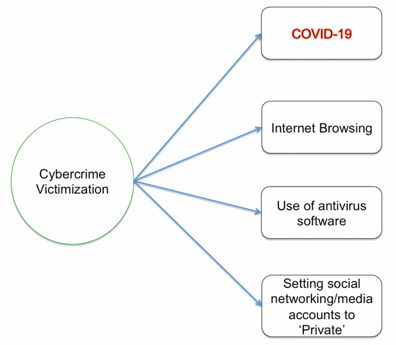
The study examined the changes in online routines, cybercrime rates and the applicability of the Routine Activities Theory (RAT) resulting from the COVID-19 pandemic. The RAT proposes that, upon the spatiotemporal convergence of an offender and target, a crime event results from an offender’s rational but subjective assessment of a target’s suitability and level of guardianship. The study used cybercrime victimisation data collected with a self-administered survey pre- and post-COVID-19 (N = 149 Facebook users of varying ages, ethnicities, and geographic locations within The Republic of Trinidad and Tobago). The change in online routine, cybercrime rate and their relationship to COVID-19 were assessed using Bayesian t-tests, -tests and Propensity Score Matching. Additionally, pre-and post-COVID-19 classification models were compared to identify any change in the utility of the RAT. The study found that there was a general increase in online routine activities particularly those resulting in increased time spent online and accessing pornographic content. Further, the predictors of victimisation changed, and the predictive accuracy of the classification model decreased. However, it was determined that cybercrime victimisation rates decreased post-COVID-19 and that the change had a causal dependence on the implementation of guardianship measures. The study concluded that increased use of technical guardianship measures such as the use of protective software and implementation of browser security protocols led to the decreased rate of victimisation, particularly as cybercrime shifted from interpersonal crimes to techno-centric cybercrimes. However, the study was limited due to the use of chain referral sampling and the fact that a control group could not be used because this was a global ‘treatment’. The findings suggest that increased focus by policymakers on targeting hardening and removal measures through the implementation of technical guardianship and cyber-safety awareness and education can help reduce cybercrime victimisation. This study highlights the need for further research into motivations for protective online behaviour and the role of exogenous shocks in changing crime and behavioural patterns.
Downloads
Published
Issue
Section
License
Copyright (c) 2022 Caribbean Journal of Multidisciplinary Studies

This work is licensed under a Creative Commons Attribution-NonCommercial 4.0 International License.