Archives
-
Caribbean Journal of Multidisciplinary Studies
Vol. 1 No. 1 (2022)

` Editorial Introduction to the Inaugural Issue
On behalf of the Managing Editor, Ms Brenda James, and the entire Editorial Board, I take this opportunity to say how delighted I am to announce the publication of the inaugural issue of the Caribbean Journal of Multidisciplinary Studies (CJMS). This journal was conceptualised over a year ago; and thanks to the entire team of blind reviewers, copyeditors, associate editors, authors, electronic system managers as well as the publishing and marketing team members, we are able to publish our first issue of six high-quality journal articles.
The CJMS is an online, open access, double-blind, peer-reviewed journal, which publishes multidisciplinary scholarly works expressed through various media. The journal provides a platform for academic discourse about various disciplines including the Performing Arts, Science and Technology, Education, Engineering, Agriculture, Criminology and the entire range of the humanities and social sciences spectrum. The journal functions as a catalyst for innovative inquiry impacting the national and regional community. However, it is not only designed to foster communication among scholars. The journal is also meant to offer solutions to societal problems.
I am happy to share with you a sneak preview of what this inaugural issue contains. The first article is a qualitative action research study in education that deals with the efficacy of constructing an online flipped creative writing classroom for a standard three primary school during the COVID-19 pandemic.
The second article is entitled Carnival Dawn: An approach to cross-cultural musical fusion in times of change. This performing arts study describes the national musical context and examines aspects of Trinidad and Tobago’s Carnival culture and Western classical sonata form while demonstrating their versatility for use in the online environment.
The next article presents a snapshot of the effects of sheltering in place by assessing the effects of COVID-19 on online routine activities and cybercrime.
The following three engineering pieces complete the list of articles in this first issue:
- failure analysis of a sucker rod from an oil well located offshore Trinidad and Tobago
- determining viscoelastic behaviour on sweet potato (Ipomoea batatas L.) tissue
- a techno-economic analysis of the Guapo Cruse E Heavy Oil Sands in Trinidad and Tobago.
The quality of a journal is impacted by the members and academic credentials of its editorial board. The CJMS is honoured to have a cadre of distinguished scholars in divergent fields who provide unpaid, honorary service as ambassadors, thus enhancing the credibility of the journal. I thank you for your continued support as we embark on this journey of scholarship and national service.
The CJMS team also looks forward to receiving high-quality pieces from all those who wish to publish in the second issue of this multidisciplinary journal.
Professor Stephen Joseph, Chief Editor,
Caribbean Journal of Multidisciplinary Studies (CJMS)
-
Caribbean Journal of Multidisciplinary Studies
Vol. 4 No. 2 (2025)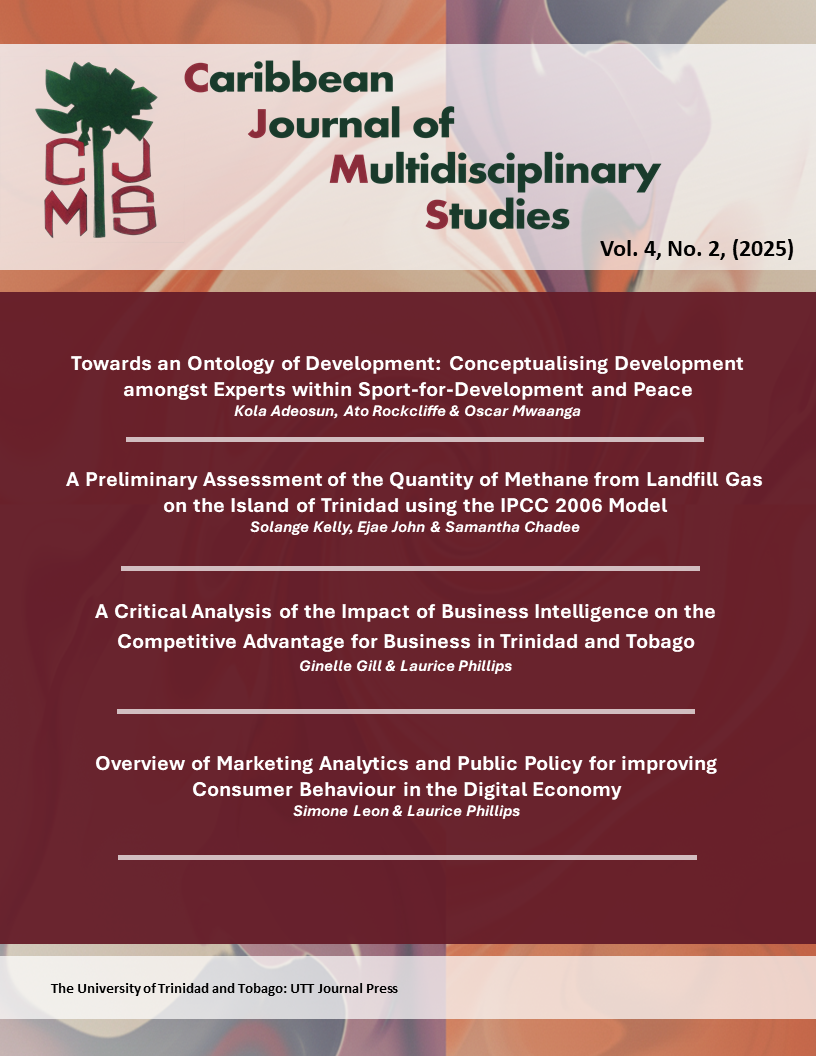
-
Caribbean Journal of Multidisciplinary Studies
Vol. 2 No. 1 (2023)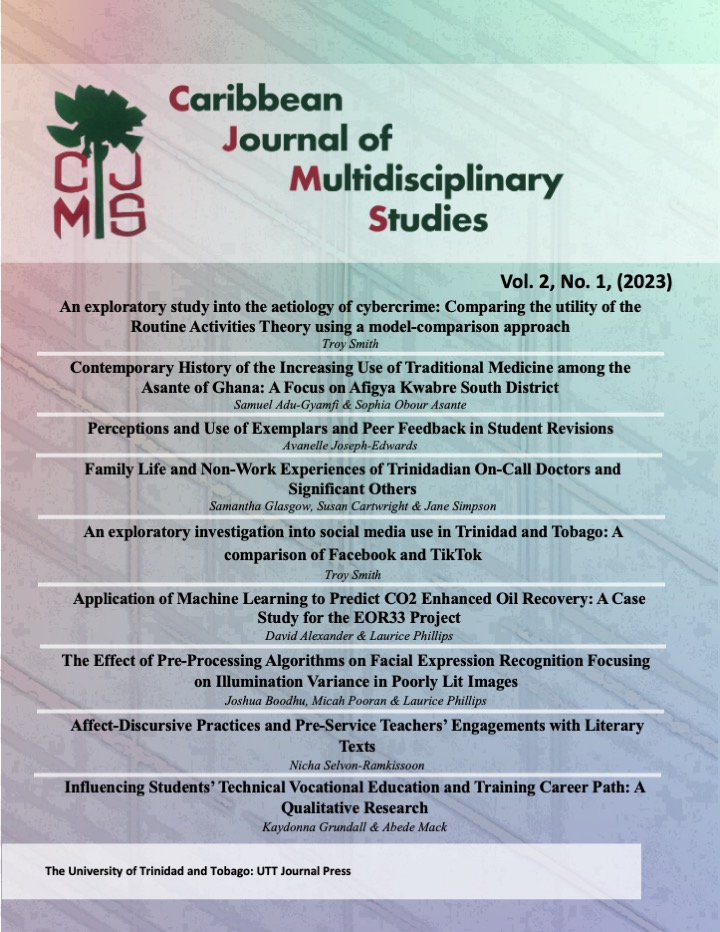
-

Caribbean Journal of Multidisciplinary Studies
Vol. 4 No. 1 (2025)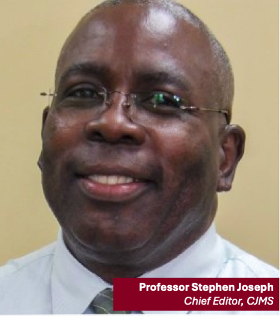
Editorial Note
I am pleased to introduce this special issue of the Caribbean Journal of Multidisciplinary Studies (CJMS), dedicated to exploring the challenges, opportunities and evolving landscape of higher education quality and workforce development in the Caribbean. This collection of articles represents a significant contribution to the ongoing discourse in higher education, offering fresh perspectives, innovative research, and critical insights that advance both scholarship and practice.
I extend my sincere appreciation to our esteemed Guest Editors, Dr Natalie Persadie and Dr W. Marc Jackman, whose dedication and expertise have been instrumental in shaping this special issue. Their meticulous efforts in curating high-quality submissions, coordinating the peer-review process, and ensuring the thematic cohesion of this volume have been invaluable.
I also acknowledge the authors and reviewers whose contributions have upheld the rigorous academic standards of this journal. Their commitment to scholarly excellence has enriched this issue and, by extension, the broader academic community.
Finally, I express my gratitude to the editorial and production teams of CJMS for their continued efforts in maintaining the quality and integrity of our publication. We hope that this special issue serves as a valuable resource for researchers, practitioners, and policymakers alike, sparking further dialogue and inquiry into higher education quality and workforce development in the Caribbean.
We invite you to explore the contributions within this issue and welcome your feedback as we continue these important conversations.
Professor Stephen Joseph
Chief Editor,
Caribbean Journal of Multidisciplinary StudiesIntroduction to the Special Issue
In October 2023, the University of Trinidad and Tobago co-hosted the annual Caribbean Area Network for Quality Assurance in Tertiary Education (CANQATE) conference. The theme of the conference was Higher Education Quality and Workforce Development in the Caribbean: Issues, Challenges, Opportunities and Solutions.
Workforce development encompasses all postsecondary education, training and related activities that prepare workers to gain access to and thrive in good-paying jobs and careers. It also includes efforts to align various education and training programmes with the evolving demands of contemporary work. The effects of globalisation on production and trade, impacts of climate change and natural disasters, expanded automation of work processes, and the rapid integration of technology into work heightened the prospect for worker displacement and the adjustments needed for all workers.
More recently, the rise of Artificial Intelligence (AI) has threatened the jobs and earnings of even the most highly educated workers. Many of these impacts were exacerbated by the COVID-19 pandemic. Moreover, the ability to obtain livable-wage jobs will now be contingent on learners having appropriate postsecondary education and training and a range of general and occupational competencies that employers demand. Furthermore, employees will need to develop the ability to pivot quickly in a changing work environment that requires the acquisition of new and more complex skills.
Prior to the COVID-19 pandemic, higher education was undergoing rapid changes driven by advances in digital technologies. As such, the pandemic significantly accelerated these trends which have disrupted traditional higher education models and transformed the way in which they are delivered and supported. While many of these changes present opportunities to expand access and improve student learning outcomes, they also pose notable challenges. For example, the recent rise in AI technology has simultaneously evoked fears about the potential for academic dishonesty, excitement about opportunities to innovate pedagogical practices, and worry about curricula relevance for workforce development in this age of AI applications like ChatGPT.
Stakeholders were invited to tackle these varied issues and share ideas and solutions on how higher education meets the moment, guided by the following sub-themes:
- Employability and Higher Education Quality: Synergies between Employers and Educators
- The impact of Artificial Intelligence (AI) on higher education quality and workforce development
- Enhancing higher education quality for environmentally sustainable development and mitigating the challenges posed by climate change
- Higher education in a post-pandemic world: How many of our pandemic practices do we keep without compromising quality?
The conference yielded many thought-provoking presentations and discussions, some of which are now presented as articles and position papers within the various sub-themes. We hope that you find them equally interesting and informative and might even consider reflecting on the ways in which these discourses apply to you and your organisation.
Dr Natalie Persadie & Dr W. Marc Jackman
Special Issue Editors