Authors
-
Laurice Phillips
-
Joshua Boodhu
-
Micah Pooran
Keywords:
facial expression recognition, image denoising, OpenCV, Google’s Vision API
Abstract
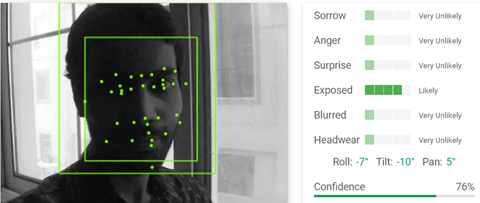
Facial Expression Recognition can be applied to various research areas, and with the emergence of modern technologies, FER systems have increased accuracy in real-world applications, instead of just laboratory environments. Although there has been an increase in accuracy, there is still a wide gap in the accuracy between laboratory-controlled systems, which averages approximately 97% accuracy, and the application of these systems to real-world scenarios, which averages approximately 50% accuracy. One of the main issues that causes this difference in accuracy is illumination variation. In this research, we aim to increase the accuracy of FER systems when applied to real-world scenarios, by investigating the effect of pre-processing filters on poorly lit images, or images with illumination variation before passing an image to the FER system (Google Cloud Vision) for detection. The pre-processing algorithms chosen were histogram equalization, contrast limited adaptive histogram equalization and denoising. A proposed method combining these algorithms were also applied. From our experimentation using the YALE faces dataset, the results obtained showed that the proposed method increased accuracy for subjects with darker skin tones, and in poorly lit images, however when applied to subjects who are lit well, there is an overall decrease in accuracy. In future research, experimentation using more pre-processing algorithms should be performed on dataset/s that include a higher number of dimly lit photos.
Author Biographies
Laurice Phillips
is an Assistant Professor in the Centre for Information & Communication Technology at The University of Trinidad and Tobago where he also serves as the Programme Leader for the Masters in ICT. Dr Phillips holds a BSc in Computer Science & Management, an MSc in Computer Science and a PhD in Computer Science from the University of the West Indies. Dr Phillips’s doctoral research specialised in digital fingerprint classification where he was awarded local and international patents for a novel technique in digital fingerprint classification using Regular Expression Machine Learning through the University of the West Indies. Dr Phillips has over (20) years of teaching, research and professional experience in computer science and information & communication technology. His main areas of research include Digital Image Processing, Biometric Recognition and Machine Learning techniques.
Joshua Boodhu
is a graduate of the Electrical and Computer Engineering Bachelor's Programme offered at the University of the West Indies. He has worked as an IT Analyst for a multinational company, and currently holds the position of Electrtical Engineering and ICT Standards Officer at the Bureau of Standards, Trinidad and Tobago, with over five years’ experience. He is currently pursuing a Master’s degree in the field of ICT at the University of Trinidad and Tobago. His research interest is in the area of AI and machine learning, focusing on computer vision. He is a collaborative, detail-oriented professional who actively seeks opportunities to learn and grow. Mr Boodhu is committed to making positive contributions to the field of Engineering and Technology.
Micah Pooran
is a driven and innovative researcher who is currently pursuing his master's degree in Information Technology at the University of Trinidad and Tobago. After completing his bachelor's degree in Electrical and Computer Engineering at the University of the West Indies, he worked as a Systems Analyst for an HR software company, where he was responsible for analyzing user requirements, designing and implementing software solutions, and providing technical support to clients. Currently, Micah is working as a Business Analyst, where he is responsible for analyzing business requirements, developing and implementing IT solutions, and collaborating with various stakeholders to ensure the smooth operation of IT systems. Micah's research interests include the application of machine learning, artificial intelligence, and data analytics in various fields, including healthcare, energy, and transportation. He is particularly interested in exploring the use of these technologies to address social and environmental challenges in the Caribbean region.