
Overview of Marketing Analytics and Public Policy for improving Consumer Behaviour in the Digital Economy

Authors

  • Laurice Phillips The University of Trinidad and Tobago
  • Simone Leon The University of Trinidad and Tobago

Keywords:

Marketing Analytics, Predictive Analysis, Machine Learning, Stimulus-Organism-Theory, Policy Development

Abstract

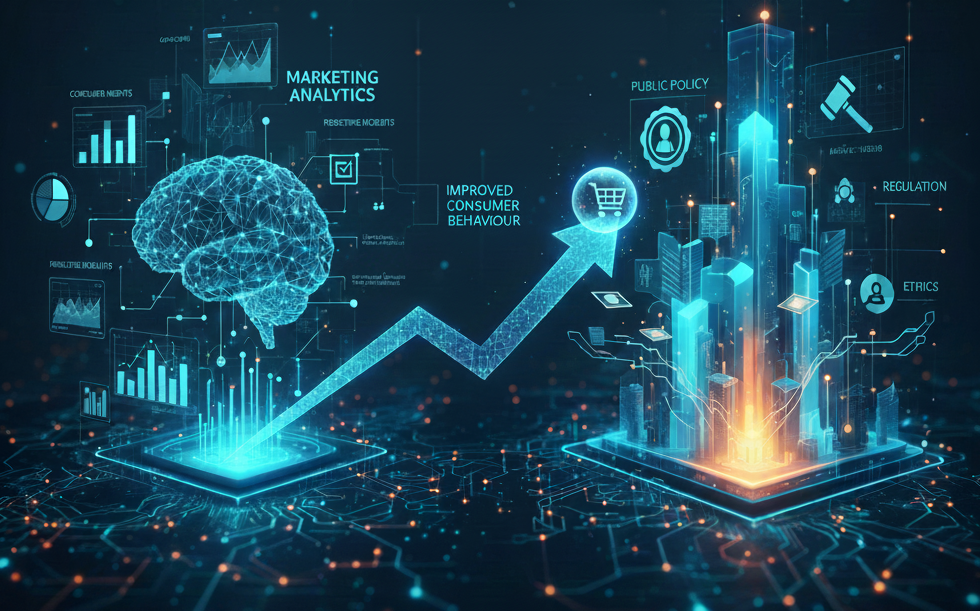
As Trinidad and Tobago (T&T) seeks to become a Caribbean pioneer in the age of Digital Transformation, it is important to recognize consumer’s engagement within a digital economy. The government of Trinidad and Tobago, being a major provider of subsidized services which provides basic needs for citizens, has received growing negative reactions towards the delivery of those services. Over the years, consumers’ dissatisfaction has led to a barrage of published negative comments. There exists an under-representation of marketing analytics approaches in literature pertaining to effectively marketing State subsidized services which would generate a positive consumer behavioural reaction. Marketing analytics can impact public policy on consumption (demand) and production (supply). For example, de-marketing of health damaging products such as cigarette smoking and alcohol consumption or up-marketing of state’s initiatives on the enhancement of life dependent utilities such as water and electricity distribution can be done through policy and regulations when using marketing analytics. This research examines the merging of marketing analytics and public policy to improve consumer perception of governmental agencies and the services they provide. Identifying the factors that presently affects consumer’s behaviour towards ministerial agencies, through predictive analysis and machine learning techniques, can stimulate consumer’s engagement and generate, overall, positive behavioural patterns and reactions towards services provided. Using the Stimulus-Organism-Response theory, the research conceptualizes marketing strategies and guidelines that can be used to induce and activate consumer’s cognitive and affective states which can then lead to a positive behavioural response. The overarching objective is to contribute to the creation of a conceptual model that identifies marketing analytics techniques which influences marketing and public policy development within State Agencies.
Author Biographies

Laurice Phillips, The University of Trinidad and Tobago

Dr Laurice Phillips is an Assistant Professor in the Centre for Information & Communication Technology at The University of Trinidad and Tobago where he also serves as the Programme Leader for the Masters in ICT. Dr Phillips holds a BSc in Computer Science & Management, an MSc in Computer Science and a PhD in Computer Science from the University of the West Indies. Dr Phillips’s doctoral research specialised in digital fingerprint classification where he was awarded local and international patents for a novel technique in digital fingerprint classification using Regular Expression Machine Learning through the University of the West Indies. Dr Phillips has over (20) years of teaching, research and professional experience in computer science and information & communication technology. His main areas of research include Digital Image Processing, Biometric Recognition and Machine Learning techniques.

Simone Leon, The University of Trinidad and Tobago

Simone Leon has over 20 years’ experience in the information technology field. She has worked at various State Agencies in similar capacities for several years. She has a strong analytical background with expertise in data management, analytical comprehension, statistical synthesis and research methodology, database management and design and business process implementation. Ms Leon possesses a Master of Science degree in Information Communication Technology and is presently pursuing a Doctorate within the same field at the University of Trinidad and Tobago. She has published several academic articles  which lend support to her current research field. Simone’s research interests include the application of machine learning, artificial intelligence, data analytics, and marketing analytics in various fields, including public utilities, healthcare, and policy development. She is particularly interested in exploring the use of these technologies to address consumer behaviour and responses to inadequate marketing strategies within the public sector.

Downloads

Published

2025-11-30